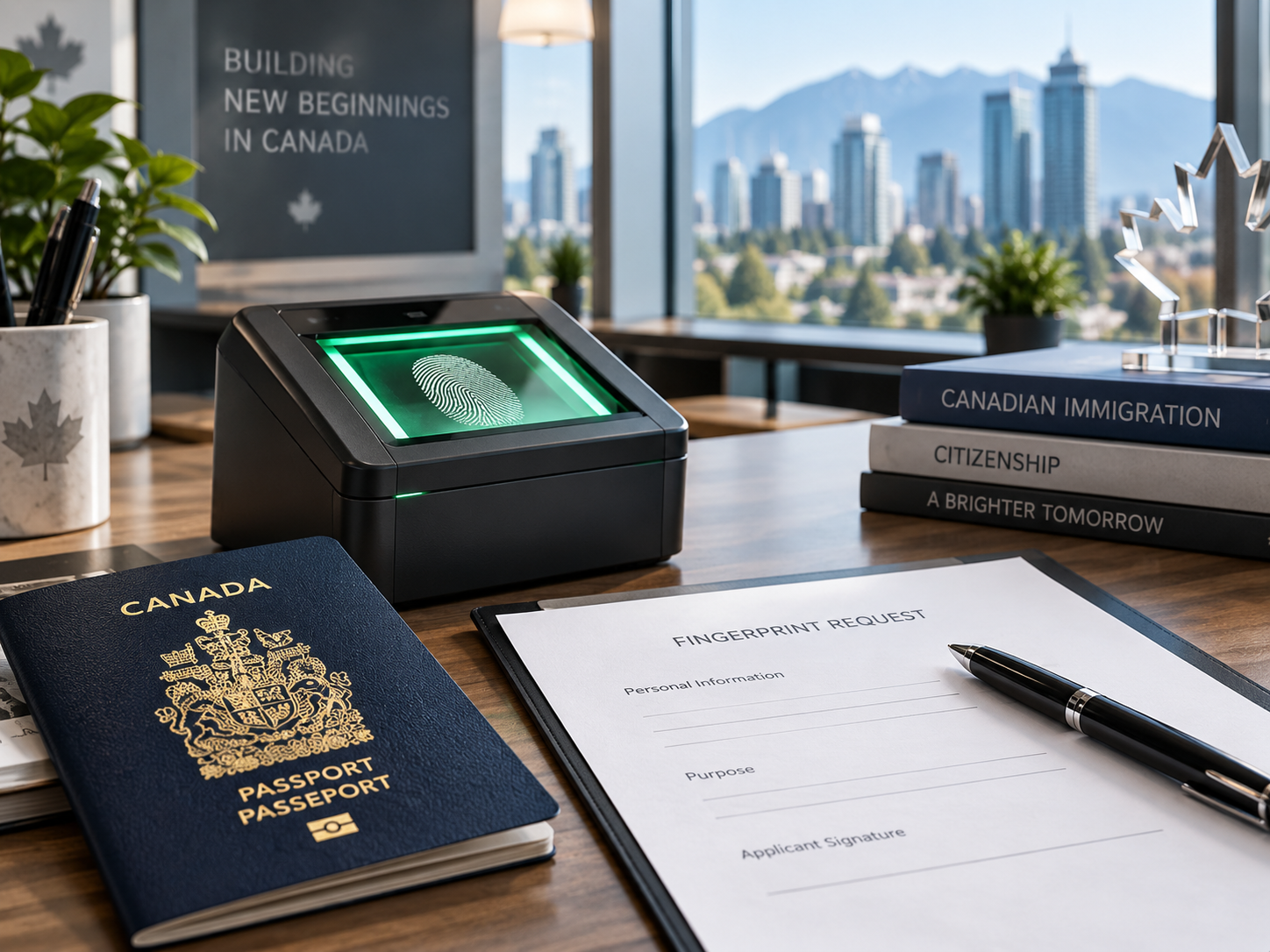
Have you received a letter from IRCC asking for fingerprints or a Canadian criminal record check? The first step is to determine exactly which type of fingerprinting IRCC is requesting. An RCMP fingerprint-based criminal record check is different from the biometrics collected for many immigration applications.
RCMP Fingerprinting vs. IRCC Biometrics
These two processes are often confused, but they serve different purposes. IRCC specifically states that fingerprints used for a Canadian criminal record check are not the same as the biometrics — fingerprints and a photograph — collected for an immigration application.
RCMP Fingerprinting
If IRCC asks you for a Canadian criminal record check or a fingerprint request that can be completed through an RCMP-accredited fingerprinting company, Point Zero can provide digital fingerprint capture and submission from our Surrey office.
Immigration Biometrics
Standard immigration biometrics normally include fingerprints and a photograph and must be provided at an authorized IRCC biometrics collection location. Point Zero does not replace an official IRCC biometrics collection location.
When Might IRCC Request an RCMP Criminal Record Check?
IRCC may ask an applicant to obtain a Canadian criminal record check while an immigration application is being processed. IRCC currently advises applicants not to obtain a Canadian criminal record check in advance unless they receive a request asking them to provide one.
If you receive an IRCC request for fingerprints, bring the request letter to your appointment so the applicable information and instructions can be reviewed before your fingerprints are submitted.
Fingerprinting for Canadian Citizenship Applications
IRCC may request fingerprints while processing a Canadian citizenship application. When fingerprints are requested for citizenship, they must be taken electronically through a local police service in Canada, the RCMP, or an RCMP-accredited fingerprinting company.
Point Zero Global Services is an RCMP-accredited fingerprinting provider in Surrey, BC. If IRCC has sent you a citizenship fingerprint request, bring the request letter with you to your appointment.
Citizenship Fingerprints Are Not Regular Immigration Biometrics
IRCC specifically instructs citizenship applicants who receive a fingerprint request to use an eligible electronic fingerprinting provider. A Service Canada biometrics appointment is not the same process as a citizenship fingerprint request.
What Should You Bring to Your Fingerprinting Appointment?
The exact requirements depend on the request you received, so always follow the instructions in your IRCC letter. For an RCMP fingerprint appointment, you should generally bring:
- Your IRCC fingerprint or criminal record check request letter
- Two valid pieces of government-issued identification
- At least one current piece of photo identification
- Any application number, reference number or additional instructions included with your request
What If You Are Outside Canada?
Electronic fingerprint submissions to the RCMP are not currently available directly from outside Canada. For applicable Canadian criminal record checks, fingerprints can be taken on paper outside Canada and sent to an accredited Canadian company that can digitize the fingerprints and submit them electronically to the RCMP.
Point Zero provides fingerprint-card conversion and Canadian submission support for eligible applicants outside Canada. The fingerprint cards and supporting documents must meet the requirements of the applicable request.
Related Fingerprinting Services
Digital Fingerprinting in Surrey
RCMP-accredited digital fingerprint capture and submission for eligible criminal record check, citizenship, employment and government requests.
Learn about digital fingerprintingRCMP Criminal Record Checks
Fingerprint-based criminal record check support when a government agency, employer or other requesting organization requires an RCMP fingerprint submission.
Learn about RCMP criminal record checksFingerprinting From Outside Canada
Support for eligible applicants whose fingerprints are taken abroad and need to be digitized and submitted through an accredited Canadian fingerprinting provider.
Learn about outside-Canada processingCBSA BSF644 Fingerprinting
RCMP-accredited digital fingerprinting for CBSA employees and employment candidates completing personnel security screening.
Learn about CBSA BSF644 fingerprintingNeed Help With an IRCC Fingerprint Request?
If you have received a fingerprint request from IRCC, bring the request letter to Point Zero Global Services in Surrey. We can review the fingerprinting instructions and help determine whether your request can be processed through our RCMP-accredited digital fingerprinting service.
Point Zero provides fingerprinting and criminal record check support. We do not provide immigration or legal advice and cannot determine eligibility, application status or immigration outcomes.